
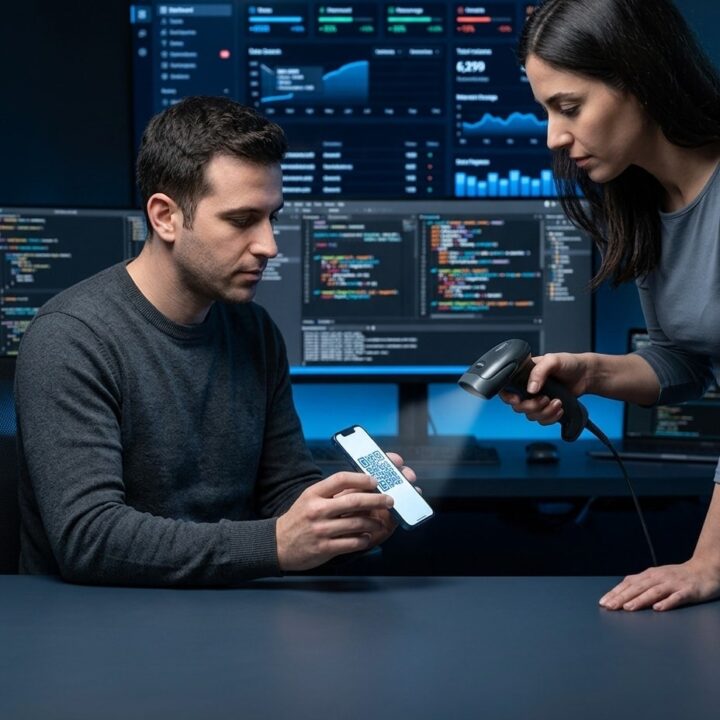
When we set out to scope and build Irua.app, we knew we were not constructing just another standard reservation portal. Deploying a resilient real-time web app architecture meant engineering for one of the most volatile runtime environments: live, high-traffic event operations, instantaneous guest confirmations, and dynamic seating adjustments. In this technical review, we break down the architectural choices that drove our engineering decisions, how we eliminated cellular network bottlenecks, and how purpose-built engineering produces a deterministic, low-latency system under sudden load spikes.
The Engineering Challenge: Mobile-First with Zero Latency Tolerance
An end user arriving at a live venue does not access the system from a desktop terminal over high-speed fiber. They tap an SMS or WhatsApp link from their car, load the interface inside an embedded in-app browser (such as Instagram or Telegram webviews), and expect an interactive interface within under one second. If rendering stutters or assets stall, conversion plummets immediately.
Our architectural strategy prioritized stripping down client-side JavaScript execution overhead, applying the architectural principles outlined in Fewer Features, Higher Conversions: The Engineering Guide to Streamlining Digital Funnels.
To ensure immediate interactivity over constrained mobile radio links, we engineered the delivery pipeline around Google's Core Web Vitals. By minifying critical-path CSS, deploying hybrid rendering (SSR backed by strict edge cache layers), and aggressively optimizing static media assets, we brought Irua.app to top-tier benchmark percentiles for Largest Contentful Paint (LCP) and Interaction to Next Paint (INP).
Real-Time Synchronization: A Conflict-Free Architecture
Managing seating allocations and guest arrivals is inherently concurrent. When an event coordinator reassigns a table on-site while dozens of guests confirm attendance simultaneously, both states must converge without forcing manual page refreshes or overwriting concurrent state transitions.
Efficient Update Delivery: SSE vs. WebSockets
When evaluating transport protocols for asynchronous state updates, we chose the Server-Sent Events protocol over bidirectional WebSockets for guest-facing data streams. WebSockets require stateful connection persistence, custom heartbeat handshakes, and higher proxy memory overhead. In contrast, SSE operates over a standard HTTP/2 connection, providing clean unidirectional streaming, lower memory consumption, native browser reconnection logic, and effortless edge-proxy pass-through.
The transactional pipeline executes across three explicit stages:
- Event Ingestion: The client dispatches a validated POST mutation with a compact JSON payload.
- Validation and Concurrency Locks: The backend executes atomic validation against the database state, preventing race conditions such as duplicate seat claims.
- Change Broadcasting: The mutation is committed and pushed down the persistent SSE stream directly into the active event coordinator console.
Resilient Web App Architecture Under Harsh Network Conditions
Event halls and underground venues frequently suffer from intermittent packet loss and degraded cellular connections. We engineered the client application using an Offline-First model coupled with Optimistic UI patterns. Check-in actions and seating updates are validated and stored locally within IndexedDB on the coordinator's device immediately. The client synchronization engine flushes updates upstream the moment connectivity is re-established, preventing on-site operational downtime.
Data Security and Privacy in Event Management
Event coordination systems process sensitive personal data: legal names, phone numbers, corporate affiliations, and personal relationships. We architected the platform strictly around the principle of least privilege:
- Ephemeral Access Tokens: Guest RSVP links use encrypted, time-bounded tokens instead of passwords, eliminating credential reuse attacks while simplifying authentication.
- Tenant Isolation: Every event container is logically separated at the database level to prevent cross-tenant data leakage across accounts.
- Automated Data Lifecycle Policies: Customer-configurable retention routines purge attendee identification payloads automatically after the event lifecycle concludes.
Engineering Summary and Architecture Review
Building high-performance software like Irua.app proves that rapid page loads, robust infrastructure, and effortless user experiences are complementary engineering outcomes rather than trade-offs. Methodical architectural choices made at inception eliminate technical debt and allow systems to scale smoothly through sudden traffic bursts.
If you are planning a modern web platform, building low-latency applications, or looking for an engineering review of your current technical architecture, get in touch with the Activated Digital team.
Share this article
Want us to take a look?
Tell us what you are building and we will come back within one business day.